

Blog
Millet vs Rice: Which Is Better for Daily Meals?

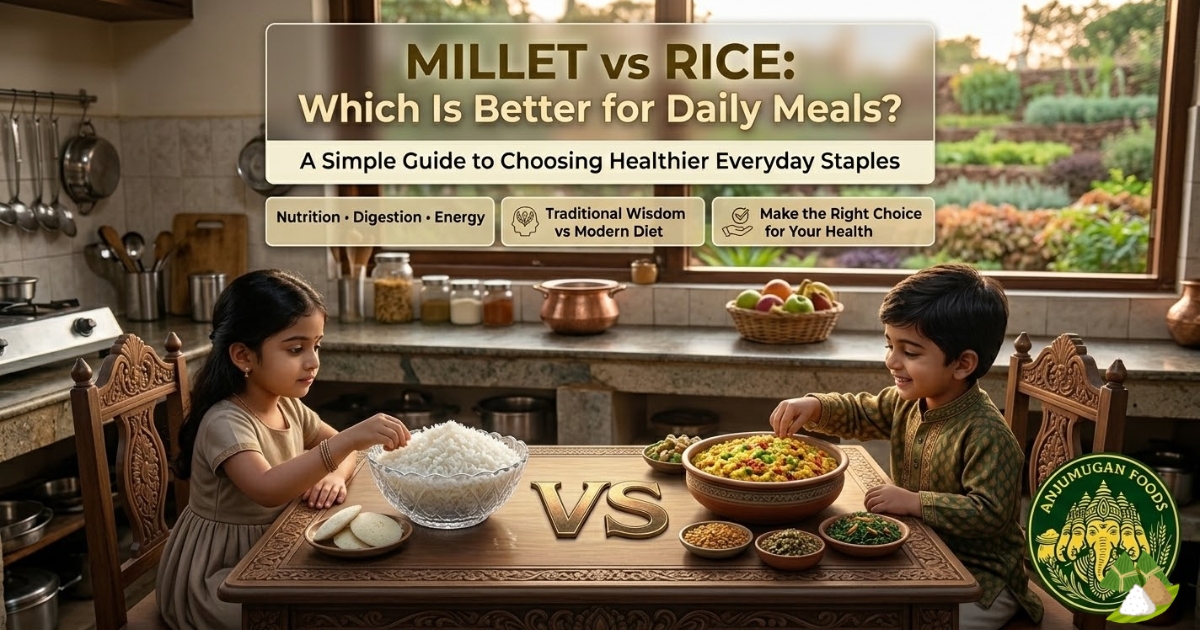
For generations, rice has been a staple in Indian households, forming the base of many everyday meals. However, in recent years, millets have started gaining attention as more people explore traditional grains and alternative food options. This has led to a common question in modern kitchens—millet vs rice: which is better for daily meals?
The answer is not about choosing one over the other. Instead, it is about understanding how both fit into a balanced diet and how traditional food habits can be adapted to suit modern lifestyles.
Understanding Rice in Daily Cooking
Rice has long been a central part of daily meals across India. It is easy to cook, widely available, and pairs well with a variety of dishes such as curries, gravies, and side dishes.
One of the main reasons rice is so popular is its simplicity. It has a neutral flavour, cooks quickly, and can be used in multiple recipes—from plain meals to more elaborate dishes.
Rice primarily provides carbohydrates, which serve as a source of energy for the body. Because of its soft texture and ease of digestion, it is often preferred for everyday consumption.
What Makes Millets Different?
Millets are a group of small-seeded grains that have been cultivated for centuries. They were once widely used in traditional diets but gradually became less common with the rise of refined grains. Today, millets are making a comeback as people revisit traditional food choices.
Millets are known for their versatility. They can be used in a variety of forms, including flour, cooked grains, and ready mixes. Different types of millets can be used to prepare dishes such as porridge, rotis, steamed foods, and other traditional recipes.
Their growing popularity is largely due to their connection with traditional diets and their ability to offer variety in everyday meals.
Nutritional Differences Between Millet and Rice
Both millet and rice provide energy, but they differ in how they contribute to overall nutrition.
✔ Millet
- Naturally contains fiber, which helps support satiety
- Includes plant-based nutrients from whole grains
- Often used in traditional diets for balanced meals
✔ Rice
- Provides quick energy through carbohydrates
- Easy to digest and suitable for regular meals
- Widely used as a base for a variety of dishes
It is important to note that both grains have their own place in a balanced diet. The goal is not to eliminate one but to understand how to include both in a meaningful way.
Cooking and Taste Differences
When it comes to cooking and taste, millet and rice offer different experiences.
Rice is known for its soft texture and neutral taste, making it easy to pair with almost any dish. It is also quick to prepare, which makes it convenient for everyday meals.
Millets, on the other hand, have a slightly firmer texture and a more distinct taste. Depending on the type of millet, the flavour can range from mild to slightly nutty. This makes millet-based dishes feel more traditional and wholesome.
Both grains can be adapted to suit different recipes, allowing flexibility in meal planning.
Which One Is Better for Daily Meals?
The question of whether millet or rice is better does not have a single answer. Instead, it depends on how they are used in your diet.
When Rice Works Well
- For quick and simple meals
- When a soft texture is preferred
- As a base for traditional daily dishes
When Millets Are a Good Choice
- When you want to add variety to meals
- For traditional recipes that use millet-based ingredients
- As part of a balanced approach to grains
Rather than choosing one over the other, many households benefit from including both grains in their weekly meal plan.
The Importance of Variety in Traditional Diets
Traditional diets were rarely based on a single grain. Instead, they included a variety of ingredients depending on availability and season.
This variety helped ensure that meals were balanced and diverse. Including both rice and millets in your diet reflects this traditional approach and helps avoid monotony in everyday meals.
For example:
- Rice can be used for main meals like lunch or dinner
- Millet-based dishes can be included for breakfast or light meals
This combination helps maintain both convenience and nutritional balance.
How Modern Kitchens Can Use Both Millet and Rice
Modern cooking allows flexibility in how ingredients are used. Instead of replacing rice completely, millets can be gradually introduced into daily cooking.
Some practical ways to do this include:
- Using millet-based products for breakfast or snacks
- Preparing traditional recipes that naturally use millets
- Alternating between rice and millet dishes during the week
This approach makes it easier to adapt traditional food habits without making drastic changes.
The Shift Toward Traditional Grains
The increasing interest in millets reflects a broader shift toward traditional foods. People are becoming more conscious of their food choices and are exploring ingredients that have been part of long-standing culinary traditions.
Millets represent this shift because they:
- Connect with traditional cooking practices
- Offer variety in daily meals
- Align with the preference for natural ingredients
At the same time, rice continues to remain an essential part of everyday cooking due to its convenience and familiarity.
Finding the Right Balance
Instead of asking which grain is better, the more practical question is how to use both effectively.
A balanced approach could include:
- Continuing regular rice-based meals
- Introducing millet-based dishes a few times a week
- Choosing traditional recipes that naturally incorporate both
This ensures that meals remain enjoyable, varied, and aligned with traditional food habits.
Conclusion
Millet and rice both have their own strengths, and neither needs to replace the other. Rice offers simplicity and familiarity, while millets bring variety and a connection to traditional diets.
The best approach for daily meals is not about choosing one over the other, but about creating a balance that suits your lifestyle and preferences. By including both grains in your diet, you can enjoy the benefits of tradition, variety, and convenience in your everyday cooking.
FAQs – Millet vs Rice
Millet is not necessarily better than rice; both have their own benefits. Including both in your diet helps maintain balance and variety in daily meals.
Millet can be used as an alternative in some meals, but it is not necessary to replace rice completely. A combination of both works best for most households.
Rice is generally easier and quicker to cook. Millets may require slightly more attention during cooking depending on the type and preparation method.
Yes, both millet and rice provide energy through carbohydrates. Millets may also include additional nutrients from whole grains.
Millets are gaining popularity due to their connection with traditional diets and the growing interest in natural and less processed foods.
Yes, including both grains in your diet allows for better variety and supports balanced meal planning in everyday cooking.